✨ Encourage creativity, reduce screen time & build artistic confidence in a fun learning environment.
Give your child a creative and fun-filled summer!
🖌️ Drawing
🎨 Painting
👧 Classes for Kids & Beginners
📅 Limited Seats Available
📍Enroll Now!
Register now to reserve your seat for summer art classes ( Limited seats )
ArtShades journey of dedication, hard work with their students
Learn traditional form of painting that have been practised for centuries in India at ArtShades.
These paintings reflect our history and our ancient culture.
Madhubani painting, or Mithila art, is a traditional Indian folk art from Bihar. It originated in the Mithila region of Bihar,
characterized by vibrant, geometrical patterns,intricate line work. It uses twigs, fingers, brushes, and nib pens to create distinct styles.
Traditionally paintings used natural pigments like turmeric, sandalwood, indigo, and rice powder.
These painting used natural dyes on the mud walls and on cloth.Now it is made on handmade paper and is very popular art form all over the world. The art highlights
Themes from mythology and nature, depicts Hindu deities (Sita-Rama) and scenes from daily life, nature, often featuring fish, birds
and flowers.
Bharni (filled with color), Kachni (line art), and Godna (tattooing).
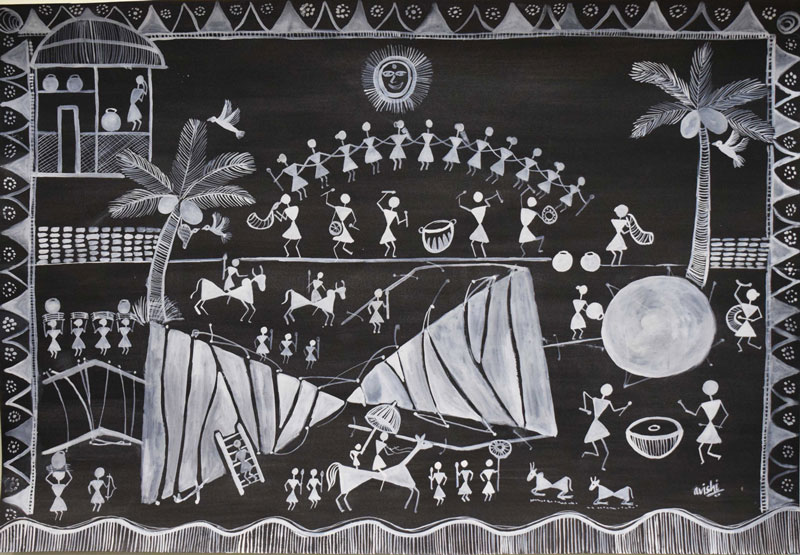
Warli painting is tribal art mostly created by the Warli people from Maharashtra, India.
The paintings are usually done on mud walls, using a white pigment made from rice paste and water.
They depict daily life, farming activities, animals,
and natural elements in simple geometric shapes. Traditionally, Warli art is created by women and is often linked with rituals
and celebrations
The art form relies almost exclusively on simple shapes: circles (representing the sun and moon),
triangles (derived from mountains and pointed trees), and squares (representing a sacred enclosure or piece of land).
The "Tarpa" Dance- Central to Warli culture is the Tarpa dance,
where villagers entwine hands and move in a circle around a musician playing a trumpet-like instrument,
symbolizing the circle of life.
Instead of depicting mythological gods, themes used in warli art honors Mother Nature and the close-knit bond between the community,
agriculture, and wildlife.
Traditional vs. Modern Techniques -
Traditional Method: It was painted by women on mud-plastered walls of village huts,
the canvases used a paste of rice flour and water, applied with chewed bamboo sticks that functioned as brushes.
Today, artists use white acrylic or natural pigments on terracotta, cloth, and
paper canvases. Modern interpretations even incorporate contemporary elements
like cars, trains, and bicycles alongside the traditional village motifs